Signals on the headlands
Coastal communities relied on elevated fires, daylight marks, and local knowledge to warn vessels away from dangerous approaches.
History timeline
Six milestones trace how warning fires, engineered towers, optics, keeper labor, electrification, and preservation reshaped the northern coast.
Before permanent towers
Coastal communities relied on elevated fires, daylight marks, and local knowledge to warn vessels away from dangerous approaches.
Early masonry era
Permanent towers gave exposed headlands a durable warning point and established a new rhythm of maintenance and watchkeeping.
Optical innovation
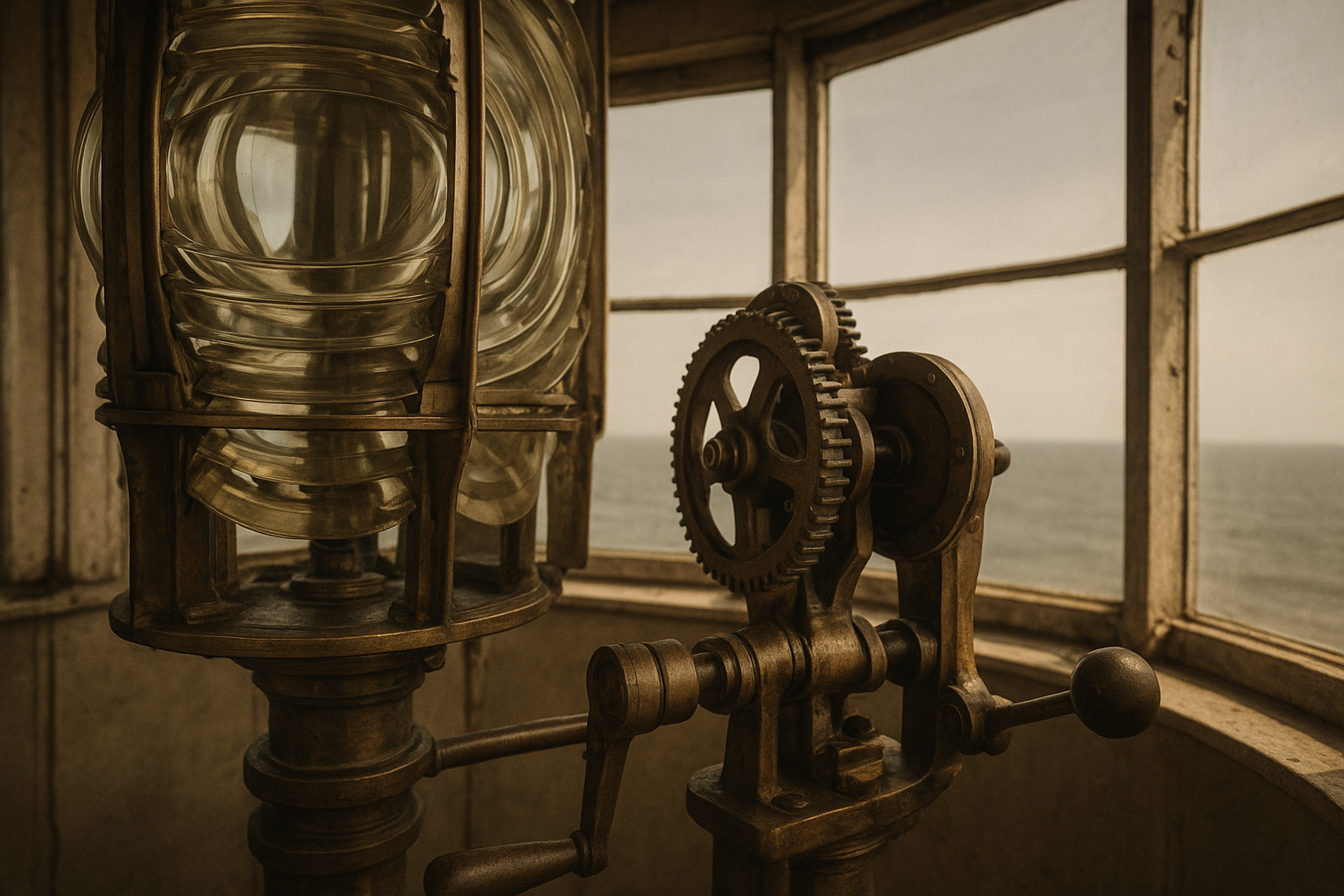
Improved optics concentrated light farther across the water while demanding careful cleaning, alignment, and record keeping.
The keeper years
Keepers tended fuel, mechanisms, weather logs, and rescue readiness through isolation, storms, and long winter darkness.
Electrification
Electric systems simplified some routines while changing the skills, staffing, and machinery required inside the tower.
Preservation
Surviving towers now carry architectural, technological, and community memory even where their original duties have changed.